🍃Free shipping over ₹999 · Estate-direct from the Nilgiris since 1994


Three Generations at Kaircombai: Life on a Nilgiris Tea Estate
Forest Brews Team · 12 Aug 2024 · 9 min read
My grandfather, T. Rajan, came to Kaircombai in 1993 with a background in agriculture but no experience of tea. He had spent 15 years working on mixed plantations in Coorg — coffee, cardamom, pepper — and had become interested in tea after a trip to the Nilgiris with a colleague whose family ran a small estate near Kotagiri. He spent a year walking estates, talking to planters, reading the Tocklai research bulletins. He bought the Kaircombai plot in 1994.
The estate then was 8 acres of previously abandoned tea, the plants badly pruned and half-shaded by encroaching silver oak. My grandfather spent the first three years rehabilitating — rejuvenation pruning to bring the bushes back to productive frame height, clearing the shade, replanting the gaps with TN UPASI-approved clonal varieties that suited the altitude and soil. He kept a daily diary of rainfall, temperature, and leaf weight from the time of first commercial plucking in 1997. We still have those diaries.
The first factory machinery — a small withering unit and a modest roller — was second-hand from a larger estate near Coonoor. My grandfather learned manufacturing from the estate manager there, spending three months as an informal apprentice during the 1996 inter-season. When he commissioned his own factory in 1997, the estate manager came for a week to supervise the first runs. That kind of knowledge transfer — practical, person-to-person — was how the industry worked, and in some ways still does.
My father, T. Selvakumar, grew up between Chennai (where we went to school) and Kaircombai (every school holiday). He took over day-to-day management in 2012 when my grandfather's health began to decline, and spent the first two years reorganizing the estate's commercial relationships. This was the period when we formalized supply agreements with Brooke Bond and began supplying 2 Roses Tea. The supply to commercial blenders was reliable income that allowed us to invest in processing equipment without the capital risk of depending entirely on direct sales.
The current generation — my brother and I — began spending serious time at the estate after 2018. We are the ones who built the direct-to-consumer business, initially out of COVID-era necessity when institutional buyers reduced orders, and increasingly because the margins of selling our own leaf under our own brand are substantially better than selling as a commodity. The Forest Brews label was trademarked in 2020; the website launched in 2021; FSSAI licensing was completed in 2022.
There are 28 people who work on the estate year-round, most from families who have been with us since my grandfather's time. The pluckers — almost entirely women, following a pattern common across Nilgiris estates — are paid per kilogram of green leaf, with a base rate that exceeds the Tamil Nadu state minimum wage for agricultural workers. We do not make this point to virtue-signal; we make it because anyone buying directly from an estate should know whether the people growing their tea are treated decently.
What has changed across three generations: scale (we have expanded from 8 to 14 acres through two acquisitions), processing (a new roller and drier installed in 2019), and the channel mix (direct online sales now represent 30% of revenue versus zero in 2012). What has not changed: the fundamental practice of plucking twice daily during flush, processing within six hours, and deciding leaf grade by hand-feel rather than by machine spec. My grandfather did it this way because he had no choice. We do it this way because experience tells us the results are better.
People sometimes ask whether we will ever expand to a larger, fully industrial scale. The honest answer is no. The estate is the size it is because Kaircombai has a finite amount of land with the combination of altitude, soil, and northern exposure that produces our character. Beyond 20 acres, we would have to plant on less suitable land. The quality would shift. We would become a different business — bigger, perhaps, but no longer making the tea that Tata and Brooke Bond source for specific blend correction, and no longer making the tea that brings our customers back eight months after their first order. Size is not the goal. The goal is the cup.
Share this article
Share on WhatsAppMore from the Journal

Tea Education
Why Altitude Changes Everything: The Nilgiris Terroir
At 1,800 metres above sea level, the chemistry of tea changes. We explain what the cold, slow growth at Kaircombai does to the leaf — and why it produces a cup that valley teas cannot replicate.
Read →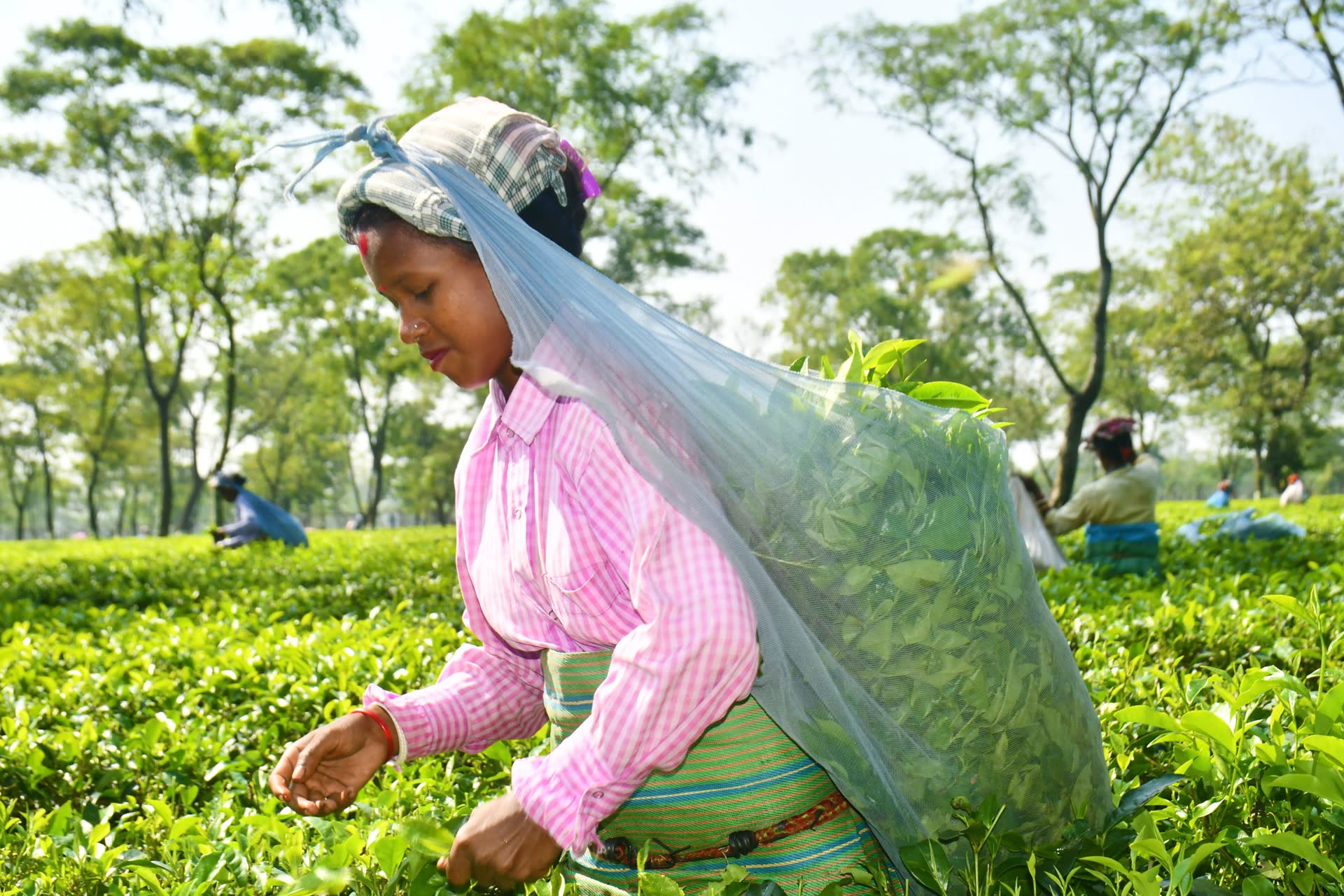
Health & Wellness
The Health Science of High-Altitude Nilgiris Tea
High-altitude teas are measurably richer in catechins and L-theanine. We look at the published science and what it means for the cup in your hand.
Read →
Brewing Guide
The Perfect South Indian Chai: A Brewing Guide from the Estate
South Indian filter kaapi gets all the attention, but proper chai from Nilgiris CTC is equally misunderstood. The estate team explains what actually makes the difference.
Read →