🍃Free shipping over ₹999 · Estate-direct from the Nilgiris since 1994


Why Altitude Changes Everything: The Nilgiris Terroir
Forest Brews Team · 15 Nov 2024 · 7 min read
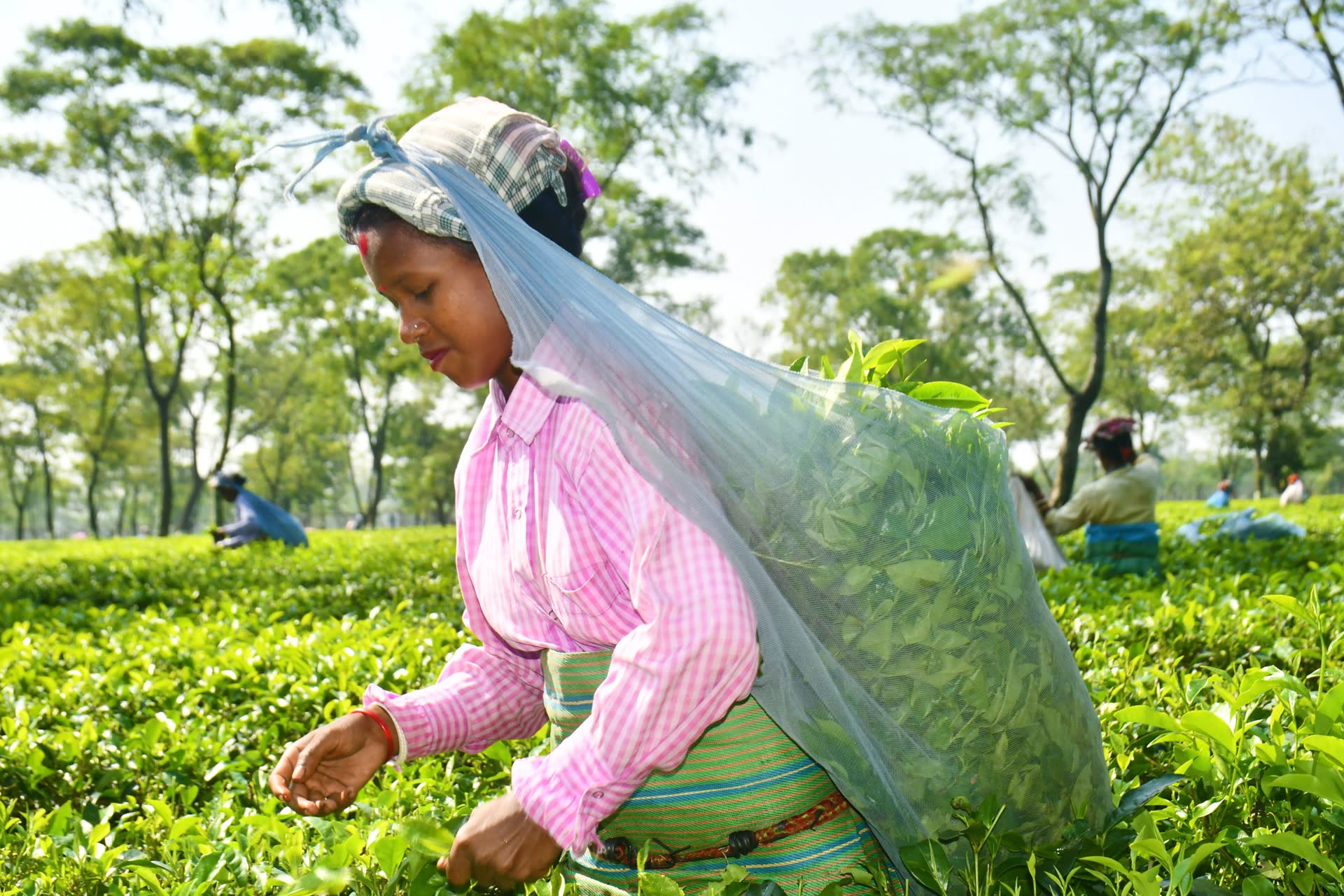
Stand in our garden at Kaircombai on a clear November morning and the first thing you notice is the cold. At 1,800 metres, the nights drop to 8–10°C even in the South Indian winter. The tea bushes, Camellia sinensis var. assamica, do not love this. They grow slowly, grudgingly, saving their energy. And that slow growth is the foundation of everything that makes Nilgiris tea different.
The science of altitude and tea quality comes down to two primary effects: temperature slowing the metabolic rate of the bush, and mist reducing direct sunlight. Both force the plant to produce more protective compounds — catechins, polyphenols, L-theanine — as a response to stress. These same compounds are responsible for flavour complexity, briskness, and the health properties that have made tea one of the most studied beverages in nutritional science.
In the Nilgiris specifically, the altitudinal range runs from about 900 metres (the lower Wynad slopes) to over 2,200 metres at the highest estates near Kodanad. The cup character changes dramatically across this range. Below 1,200 metres, you get teas that brew dark, strong, and tannic — excellent for blending but lacking in subtlety. Above 1,500 metres, the leaf develops a flowery quality, a natural sweetness, and the distinctive "muscatel" note that good Nilgiris is known for internationally.
Kaircombai sits at roughly 1,800 metres on the northern face of the Nilgiris plateau, near the Mudumalai Wildlife Sanctuary. The microclimate here is cooler and more consistently misty than estates at the same altitude on the southern face. Our grandfather chose this plot in 1994 not by accident — he spent two years tasting teas from across the region before committing to Kaircombai. The northern exposure, combined with the proximity to the reserve forest (which acts as a moisture bank), produces the consistently bright, brisk character that defines our teas.
The term "terroir" is borrowed from wine, but it applies to tea just as usefully. Terroir describes all the environmental factors — soil composition, rainfall pattern, altitude, ambient temperature, surrounding vegetation — that shape a crop's final character. For us, terroir is not a marketing concept. It is the reason a cup brewed from our leaf tastes different from a cup brewed from tea grown 40 kilometres away at the same altitude on a different soil type.
Our soil is a red-loam mix with significant organic content from the surrounding forest. We have not conducted formal spectral analysis, but empirically, the soil retains moisture well without waterlogging — critical for tea, which needs drainage to prevent root disease. We supplement with composted tea prunings and minimal chemical inputs. Three generations of minimal-intervention farming have built a soil biology that we believe contributes meaningfully to cup quality, though that link is impossible to prove directly.
What we can say with certainty is this: when Tata Consumer Products and Brooke Bond (HUL) buy from us, they are not buying generic CTC to fill quota. They are sourcing for specific blend requirements where Nilgiris brightness corrects for heaviness in Assam or Dooars component teas. Our leaf is used as a flavour corrector in some of India's best-selling branded teas. That is the commercial validation of terroir, even if the final consumer never knows it.
Share this article
Share on WhatsAppMore from the Journal
Health & Wellness
The Health Science of High-Altitude Nilgiris Tea
High-altitude teas are measurably richer in catechins and L-theanine. We look at the published science and what it means for the cup in your hand.
Read →
Brewing Guide
The Perfect South Indian Chai: A Brewing Guide from the Estate
South Indian filter kaapi gets all the attention, but proper chai from Nilgiris CTC is equally misunderstood. The estate team explains what actually makes the difference.
Read →
Estate Life
Three Generations at Kaircombai: Life on a Nilgiris Tea Estate
From our grandfather's first planting in 1994 to the third generation running the factory today — what changes, what doesn't, and why we stay.
Read →