🍃Free shipping over ₹999 · Estate-direct from the Nilgiris since 1994



Grown with Intention
Sustainability
How we farm, how we treat our people, and how we package — an honest account.
14 acres
managed estate
28
year-round workers
30+
years of farming
0
brokers in our chain
Estate Stewardship
Three decades on the same land has taught us that the only way to keep farming well is to actively restore what farming takes.
Soil Health
We have farmed the same Kaircombai plot since 1994 without a single year of chemical-intensive monoculture rotation. Our soil nutrition comes primarily from composted tea prunings — the same material stripped from the bushes during the annual hard prune — returned as a thick mulch layer between the rows. Three decades of this practice have built a red-loam humus layer that retains moisture without waterlogging and supports a measurable earthworm population that we consider our most reliable soil health indicator. We supplement with limited nitrogen application during the heavy growth flush (March–May), but our input cost per acre for soil nutrients is roughly 40% below district average because the soil simply needs less.
Water Stewardship
The Nilgiris receives heavy southwest monsoon rainfall (2,200–2,800mm annually at Kaircombai elevation), and our estate sits above a forest-fed borewell that has not run dry in 30 years. We do not irrigate during monsoon months and use targeted drip irrigation only during the January–February dry spell when top soil moisture drops below a critical threshold for young clonal plants. Runoff from the estate drains into a retention pond we built in 2009, which captures eroded topsoil and provides the secondary irrigation source. We have never applied herbicide near the waterway. The pond also provides drinking water for estate wildlife — we have documented 14 bird species and three small mammal species using it.
Native Shade & Forest Edge
Tea in the Nilgiris has historically been grown under silver oak (Grevillea robusta) for shade regulation and wind protection. We maintain 180 silver oak trees on the estate, but we have also been selectively introducing native tree species — Indian laurel, wild fig, Indian plum — along the eastern boundary that borders the Mudumalai buffer zone. This was not a calculated carbon strategy; it was a response to watching soil erosion on the exposed eastern slope. The trees have worked. They have also created a 60-metre native corridor that we believe provides nesting habitat for birds that in turn control the leaf-eating insects that would otherwise require pesticide response.
Fair Labour
Continuity of workforce is not an accident. It is the outcome of paying fairly and treating people well over decades.
28
year-round estate workers
- ✓Wages above Tamil Nadu state agricultural minimum
- ✓On-estate housing available for field workers
- ✓Three generations of the same families in some cases
- ✓Plucker pay per kg — no cap on daily earnings
- ✓Children’s education support for long-tenure families
The 28 people who work at Kaircombai year-round are not a statistic we reached for. They are the estate. Murugesan K., our senior field supervisor, is the third generation of his family to work this land — his grandfather was one of the original workers when my grandfather bought the plot in 1994. That continuity is not coincidence. It reflects a pay structure and a working relationship that makes it worth staying.
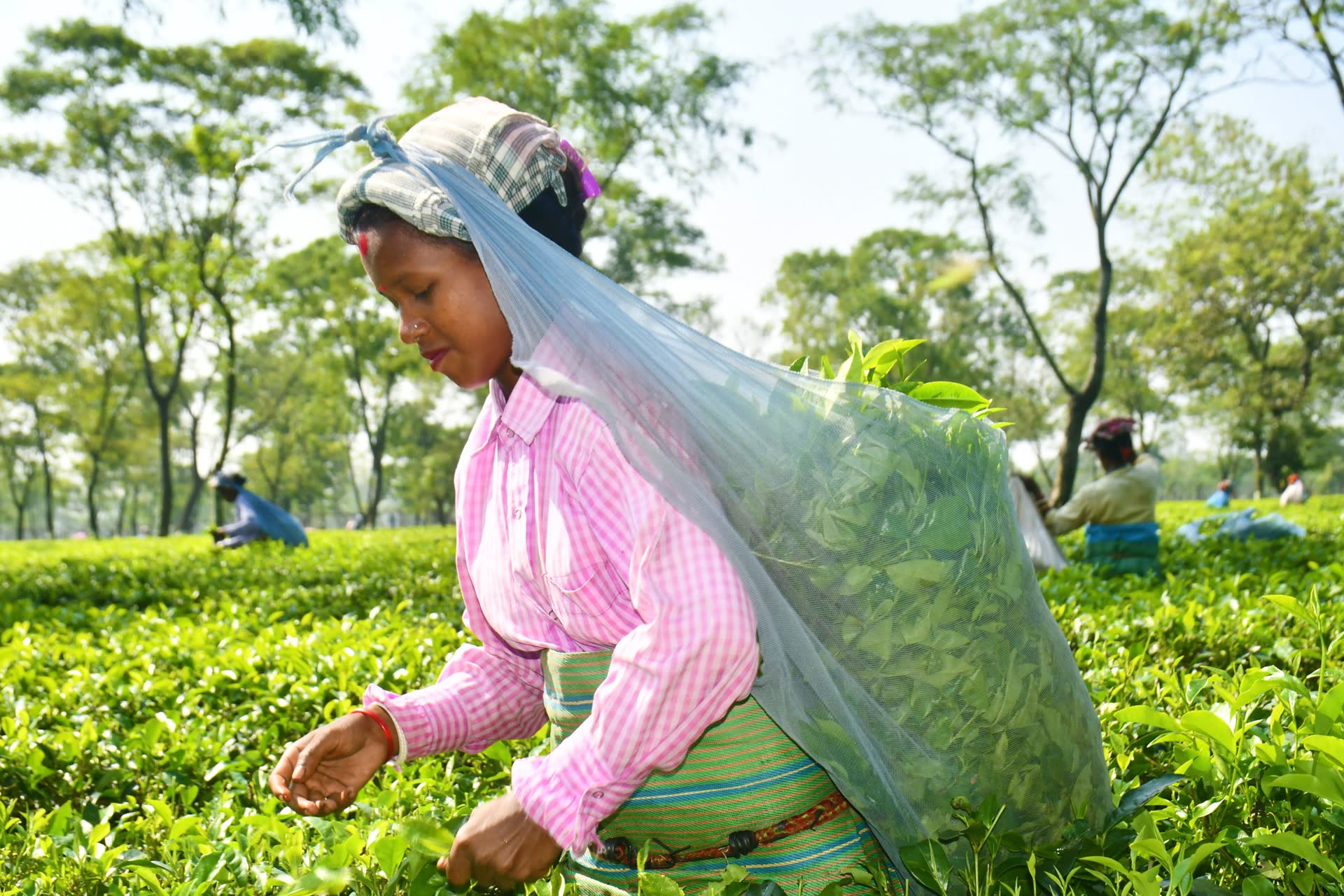
Our pluckers — predominantly women, as is the norm across Nilgiris estates — are paid per kilogram of green leaf, with a base rate that currently stands at 15% above the state-mandated minimum for agricultural piecework. During the main flush (March–May), a skilled plucker harvests 35–45 kg per day. On that day, her earnings comfortably exceed the daily wage of many semi-skilled urban jobs. This is not altruism; it is the reason we have a stable, experienced workforce instead of a revolving door of seasonal labour.
We do not run welfare programs or paternalistic schemes. We pay fairly, provide safe working conditions, and make housing available. That is the foundation. The rest — long tenure, institutional knowledge, loyalty — follows.
Zero-Broker Traceability
From the bush to your cup, we control every step. No auction floor. No blending house. No middleman taking a cut and a sample.
01
Pluck
Twice daily during flush. First flush 5:30am, second noon. Only the top two leaves and bud.
02
Process
Our factory. Within 6 hours of pluck. CTC or orthodox — batch-logged by date and grade.
03
Cup Test
Every batch tested blind by our panel before packing. Colour, aroma, briskness, body.
04
Pack & Dispatch
Packed by hand in our FSSAI-licensed facility. Dispatched within 48 hours of cup clearance.
05
Your Cup
No auction floor. No broker. No blending with off-estate leaf. One estate, start to finish.
Packaging That Earns Its Place
Tin & Kraft Pouches
Our tins are reusable indefinitely — we actively encourage customers to refill rather than discard. Our kraft paper pouches for smaller orders are unbleached and plastic-free. The inner foil layer (necessary to prevent moisture ingress for the loose leaf) is aluminium, not plastic-laminate, making it recyclable in most municipal streams.
No Styrofoam, No Bubble Wrap
We ship with recycled newspaper padding sourced from our own daily papers. We stopped using bubble wrap in 2022 when we ran a six-month trial with newspaper + kraft inner layer and found no increase in damage claims. We were surprised too.
Minimum Viable Packaging
We resist the trend of elaborate gift packaging that arrives as landfill. If you want a gift pack, we offer one: a reusable tin with a cloth top cover. The cloth is cut from cotton offcuts from a Coimbatore textile mill. That is the extent of it.
“
The most sustainable package is the one the customer uses for ten years after the tea is gone. We make the tin worth keeping.
— Estate Notes, 2022
Our Commitments
Not aspirations. Current practice.
🌱
No Synthetic Herbicides
We hand-weed between rows. It is slower and more expensive. We have never applied herbicide.
💧
Water Recycling
Runoff retention pond built 2009. Secondary irrigation source, zero chemical input near waterway.
🌳
Native Tree Programme
Ongoing replanting of native species along forest-edge boundary since 2017.
👷
Above-Minimum Wages
Plucker rates 15%+ above Tamil Nadu state minimum. Benchmarked annually.
📦
Plastic-Free Dispatch
All outbound packaging plastic-free since 2022 switch to newspaper + kraft.
✓
FSSAI Certified
License No. 12422021000409. All processing in our own licensed facility. No contract packing.