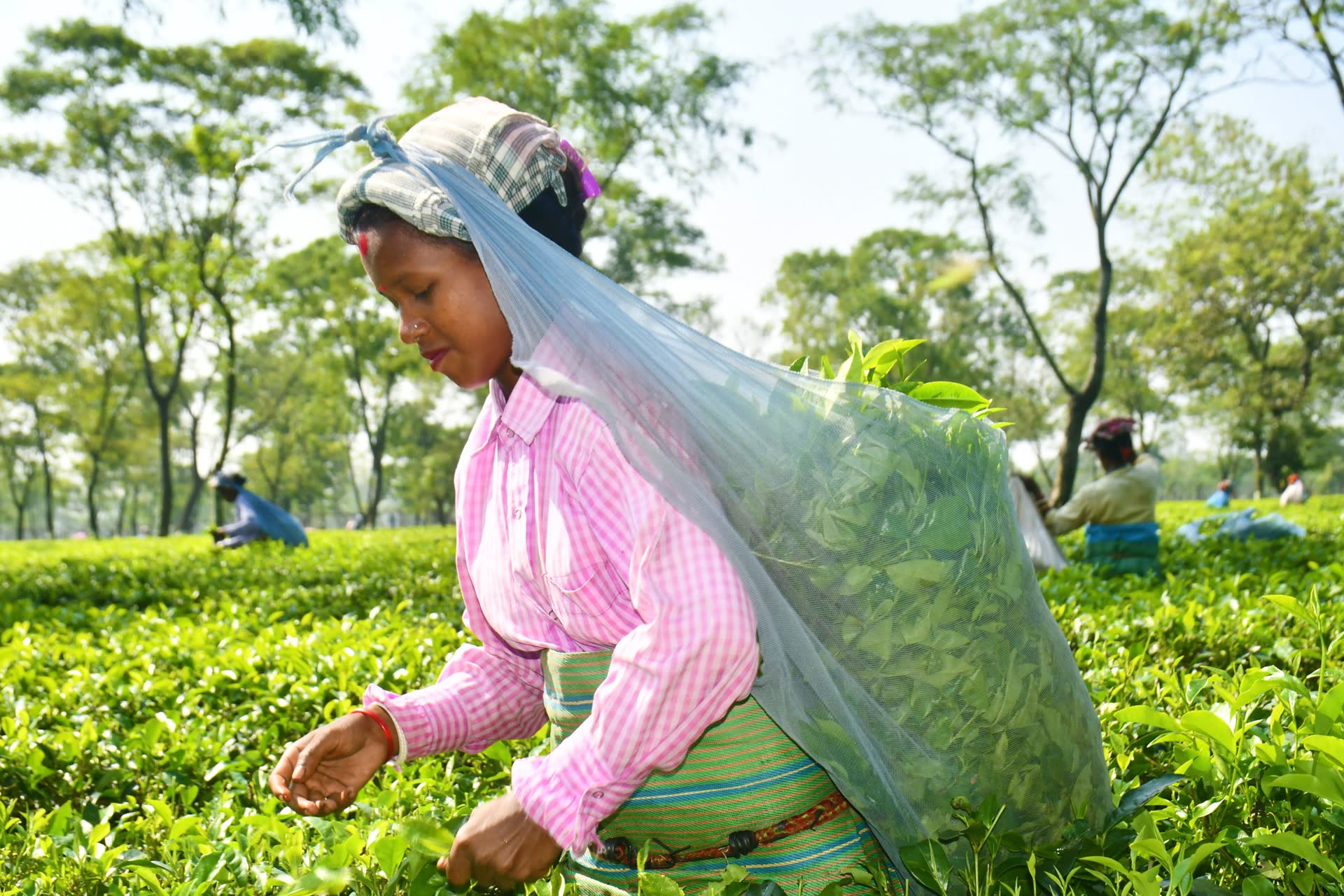
In the first weeks of December, when the Nilgiris nights drop below 5°C and frost settles on the upper garden, the tea bushes make one final, unhurried push. The leaves that emerge from this cold are dense, bright, and saturated with flavour compounds that the plant has spent the entire year accumulating. This is the winter flush — rarer than the celebrated Darjeeling second flush, and known mainly to buyers who source directly from estates.
Our Nilgiri Frost is plucked on just five to eight mornings each December, when the overnight temperature conditions are right. The total annual production rarely exceeds 80 kilograms of made tea. Withering is extended to allow the cold-stressed leaf to open fully before the roll; fermentation is short to preserve the delicate floral character. The result is a liquor that is amber-gold, luminously clear, with a honeyed sweetness and a muscatel note that intensifies as the cup cools.
This is a tea for drinking plain, without milk or sugar, in a glass or ceramic cup. It rewards patience — the first sip is soft and sweet; the finish, ten seconds later, is long and complex. We recommend a first steep at 88–90°C for four minutes and a second steep at 85°C for three. The dry leaf has a scent unlike any other grade from our estate: cold air, wildflower, and a faint note of ripe stone fruit.